Understanding the Odds: A Deep Dive into Casino Game Probabilities
Casino games have long held a unique allure, blending the excitement of chance with the challenge of strategy. For millions worldwide, the dazzling lights and clinking sounds of a casino floor promise both entertainment and the tantalizing possibility of a big win. But behind every spin of the roulette wheel or hand of blackjack lies a world governed by mathematics — specifically, probability. Understanding how odds work in casino games can be the difference between a fleeting thrill and an informed, enjoyable experience. In this comprehensive guide, we’ll explore the fundamentals of casino game probabilities, unpack the numbers that drive your chances, and examine how this knowledge can empower your play.
The Foundation: What are Casino Odds and Probabilities?
Casino odds are the statistical likelihood of an outcome occurring in a game. They determine how often you can expect to win or lose, and directly influence the payouts casinos offer. Probabilities in gambling are expressed in several ways: as ratios, percentages, or decimal odds. For instance, a probability of 1 in 6 (16.67%) in a dice game means that, statistically, one specific outcome will occur once in every six tries.
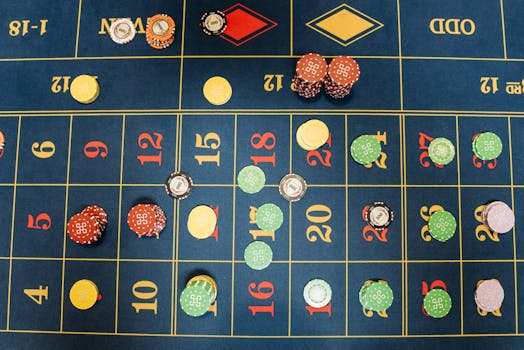
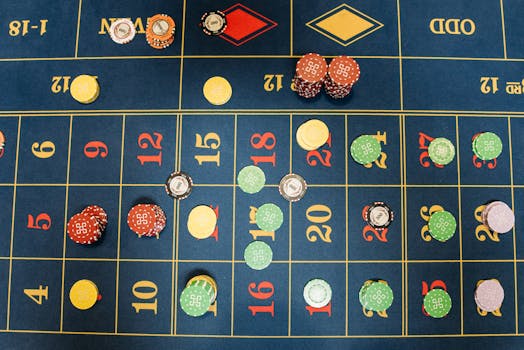
All casino games are designed around the concept of the "house edge" — a mathematical advantage that ensures, over the long term, the casino will profit. This edge varies dramatically between games. For example, European roulette carries a house edge of 2.7%, while American roulette comes in at 5.26% due to its extra double zero slot.
.png)
A key concept to grasp is variance. Some games, like slot machines, have high variance: you may win big, but less frequently. Others, such as baccarat, offer more consistent, smaller wins.
Understanding these terms is crucial for any player aiming to make informed decisions and set realistic expectations.
Game-by-Game: How Probabilities Differ Across Casino Favorites
Not all casino games are created equal when it comes to odds. Let’s break down the probabilities behind some of the most popular games:
1. $1 European roulette features 37 slots (numbers 1-36 plus a single zero), giving a straight-up bet a 1/37 (2.70%) chance to win. In American roulette, the additional double zero lowers your chance to 1/38 (2.63%). Betting on red or black gives you a nearly 48.6% chance in European roulette, slightly less in American. 2. $1 Known for some of the best odds in the casino, blackjack has a house edge as low as 0.5% when played with optimal strategy. The probability of being dealt a natural blackjack (an Ace and a 10-value card) is approximately 4.8%. 3. $1 A unique game where different bets have widely varying odds. The Pass Line bet comes with a house edge of just 1.41%. However, propositions bets like “Any 7” have a house edge of 16.67%, making them much riskier. 4. $1 Slots are notorious for their wide range of odds, which are often not disclosed to players. The return-to-player (RTP) percentage typically varies from 85% to 98%, with most land-based slots averaging around 90-92%. The probability of hitting a jackpot can be as low as 1 in 50 million spins. 5. $1 A game of few decisions, the house edge on the banker bet is 1.06%, while the player bet is 1.24%. Betting on a tie carries a much higher house edge of 14.36%.Here’s a comparative overview of typical house edges for popular casino games:
| Game | Bet Type | House Edge (%) | Probability of Win (%) |
|---|---|---|---|
| Roulette (European) | Single Number | 2.70 | 2.70 |
| Blackjack | Basic Strategy | 0.50 | ~42.22 |
| Craps | Pass Line | 1.41 | 49.29 |
| Slots | Average | 8.00 | Varies |
| Baccarat | Banker Bet | 1.06 | 45.86 |
The House Edge: How Casinos Ensure a Long-Term Advantage
The concept of the house edge is central to understanding casino game probabilities. This percentage represents the average profit the casino expects to make from each bet over the long run. For example, if a game has a house edge of 2.7%, the casino expects to keep $2.70 for every $100 wagered, over thousands of bets.
The house edge is not a guarantee that you will lose a specific amount every time you play. Instead, it’s a statistical average that manifests over a large number of plays. Short-term variance means players can and do win — sometimes big — but over time, the math always favors the house.
Consider roulette: With its 2.7% house edge, a player may win several spins in a row, but if they play long enough, their results will begin to closely mirror the statistical expectations. This is why casinos thrive: every game is engineered so the house wins in the long run, regardless of short-term outcomes.
Player Choices: How Strategy and Bet Selection Impact Odds
While luck is an undeniable factor in all casino games, player decisions can have a significant impact on the odds in certain games. Strategic play is especially relevant in games like blackjack and video poker. For instance, using basic strategy in blackjack can reduce the house edge from over 2% to as low as 0.5%. In video poker, choosing optimal plays can push the RTP up to 99.5% or higher.
Bet selection also matters. In craps, sticking to low-house-edge bets like the Pass Line or Don’t Pass Line is much wiser than making high-risk proposition bets. In roulette, betting on single numbers offers a huge payout (35:1) but with low probability (2.7%), while even-money bets like red/black provide better chances but smaller returns.
It’s also important to recognize that in games of pure chance, like slots or roulette, no strategy can alter the underlying probabilities. However, understanding the odds helps you manage your bankroll and make bets that align with your risk tolerance.
Randomness and Fairness: The Role of RNGs and Regulation
Modern casino games, especially those found online, rely on sophisticated Random Number Generators (RNGs) to ensure that outcomes are completely unpredictable and fair. An RNG is a computer algorithm that produces sequences of numbers with no discernible pattern. In reputable casinos, these systems are regularly tested by third-party agencies such as eCOGRA or GLI to verify their fairness.
For example, in slot machines, each spin is independent and unaffected by previous results — a phenomenon known as "the gambler’s fallacy" often leads players to mistakenly believe that a machine is "due" for a win. In reality, the probability remains constant on every spin.
Regulatory bodies set standards for minimum payout percentages and oversee the integrity of games. In Nevada, for instance, slot machines must have a minimum RTP of 75%, but most pay significantly more. Online, RTPs are often higher, averaging around 96% for many popular slots.
Probability in Action: Real-Life Examples and Simulations
Let’s look at a practical example using roulette. If you place a $10 bet on a single number in European roulette, your chance of winning is 1 in 37, or 2.70%. The payout is 35:1, so if your number comes up, you win $350. However, if you play 37 spins with a $10 bet each time, statistically you’d expect to win once and lose 36 times, resulting in a net loss of $20. This is the house edge in action.
In blackjack, the effect of strategy is even more pronounced. According to the Las Vegas Convention and Visitors Authority, blackjack tables with favorable rules and players using basic strategy return over 99% of wagers to players, making it one of the best bets in the casino.
For slot machines, the odds are less transparent. Progressive jackpot slots may advertise life-changing wins, but the odds of hitting such a jackpot can be less than 1 in 10 million. The vast majority of players win smaller amounts, with the house edge ensuring profitability for the casino.
Conclusion: Making Informed Decisions at the Casino
Understanding the odds and probabilities behind casino games is more than just a mathematical exercise — it’s a pathway to smarter, more enjoyable play. Whether you’re spinning the reels, rolling the dice, or playing your hand at the blackjack table, knowing your chances empowers you to set realistic expectations, manage your bankroll, and choose the games that best fit your style.
While the house always has an edge, this doesn’t mean you can’t have fun or even enjoy a lucky streak. The key is to approach casino gaming as entertainment, armed with knowledge. Informed players not only make better choices but also enhance their overall casino experience. Remember: in the end, chance governs the outcome, but understanding the numbers puts you in control of the way you play.